Most water damage events look dry long before the structural assemblies actually are. A room that smells fine and feels dry to the touch may have framing at 25-30% moisture content — well above the 6-12% target range required for true structural drying. COS Water Damage Restoration's Ajo structural drying program is driven by daily psychrometric readings, not visual judgment.
Structural Drying is a science-driven process built on thermodynamics, psychrometrics, and equipment calibration — not fans pointed at a wet floor and checked weekly. Here's what our Ajo team brings to every structural drying project that ensures complete, documented results.
Undersized or generic dehumidification is the most common technical failure in Ajo drying projects.
Documented daily readings are what separate a professional drying program from a rental dehumidifier in the corner.
Wall cavity drying is where most post-loss mold in Ajo properties originates. It's where we focus.
COS Water Damage Restoration's Ajo drying technicians generate moisture logs formatted specifically for insurance claim submission — daily readings at sensor point locations mapped to a floor plan, equipment placement and settings recorded, and final confirmation readings that document the completion of the drying program. Xactimate-compatible line items for each day's equipment and labor make the drying scope transparent to your adjuster and minimize the chance of a supplement dispute on the drying phase of your claim.
Here are the specific drying scenarios and assembly types our Ajo team is equipped and trained to handle.
The most common drying failure in Ajo water damage projects is a wall framing cavity left with elevated moisture content after surface materials are dry. Our Ajo team uses calibrated cavity access — typically 1-inch drill holes at the base of the wall framing cavity — to introduce directed airflow from high-velocity air movers into the stud bay, paired with LGR dehumidification to extract the evaporated moisture. Moisture readings at framing sensor points confirm completion. Access ports are patched and filled after the program completes, typically leaving no visible trace of the access procedure.
Subfloor and hardwood drying in Ajo is species-specific and requires daily monitoring of cupping and moisture gradient.
Crawlspace saturation after a water event in Ajo often goes undetected — we include it in every below-grade moisture mapping session.
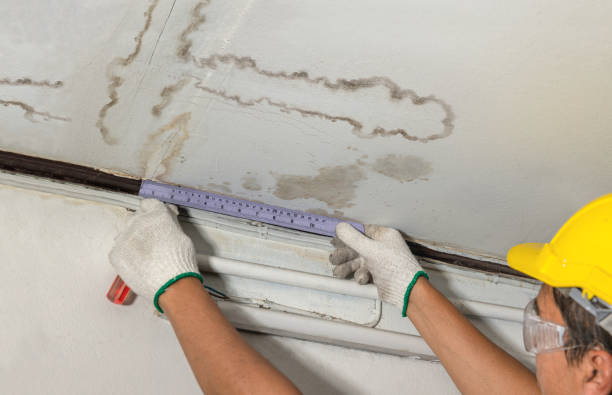
Water that migrates down from an upper floor or a roof intrusion in a Ajo property saturates ceiling drywall and the framing above it — areas that are impossible to reach with standard floor-level equipment. Our Ajo team installs ceiling injection ports and directs positive-pressure airflow through ceiling cavities, combined with LGR dehumidification of the affected room air space. Ceiling drywall that cannot be dried to target moisture content is removed — rather than left to become a mold substrate — and documented in the scope for replacement.
Large-scale commercial drying in Ajo is project-managed from day one with zone-specific reading logs.
Every active structural drying program in Ajo is also a mold prevention program — because the conditions that support mold growth (elevated moisture content in organic materials and elevated relative humidity in the air space) are exactly the conditions a drying program is designed to eliminate. Our daily reading sessions include assessment of the ambient RH and temperature conditions in each drying zone against the threshold conditions that support mold colonization. If readings suggest an elevated mold risk — particularly in projects where extraction was delayed — we address it proactively with targeted antimicrobial treatment during the active drying program.

Equipment before mapping is guesswork. Mapping before equipment is science.
Equipment placement is engineered based on the moisture map and assembly data — not placed by habit.
Daily readings, daily reporting, daily equipment adjustment if needed — documented throughout.
Completion is confirmed by instruments and documented in writing. No visual estimates.


"The most important thing about COS Water Damage Restoration's Ajo structural drying was that they explained the readings to me every single day. I understood what the numbers meant, what the target was, and how far we were from completion. By day six I was watching the moisture content readings in our wall framing drop from 28% to 11% and understood exactly what was happening and why. That level of transparency is what you need when your home is full of drying equipment for a week."
"Our insurance adjuster was skeptical about the drying scope initially, but COS Water Damage Restoration's documentation — the daily moisture logs, the floor plan with sensor point locations, the before and after readings — was thorough enough that the adjuster approved the full scope without any back-and-forth. That documentation is worth its weight in the claim settlement alone."
"We manage several Ajo commercial properties and structural drying after water events is something we deal with periodically. COS Water Damage Restoration is the only company we use because of their documentation process. Zone-specific readings, daily logs we can review from our office, and a written drying completion report at the end of every project. When a tenant asks for proof that remediation was complete, we have an instrument-confirmed document, not a technician's verbal assurance."
COS Water Damage Restoration's Ajo structural drying team serves Ajo and surrounding communities throughout AZ. Daily monitoring included. Call +1-844-499-0972 to get started.
Structural drying that's done when it looks done leads to mold. Structural drying that's done when the readings confirm it leads to a genuinely recovered property. Call +1-844-499-0972 and our Ajo drying crew brings the instruments and the protocol.
📞 Call +1-844-499-0972 — Ajo Structural Drying24/7 Available · IICRC WRT Certified · Daily Readings · Ajo, AZ